
Which is better?
They look almost identical, but there’s one key difference.
The Taz Lov3 can come off the rope while the carabiner stays clipped.
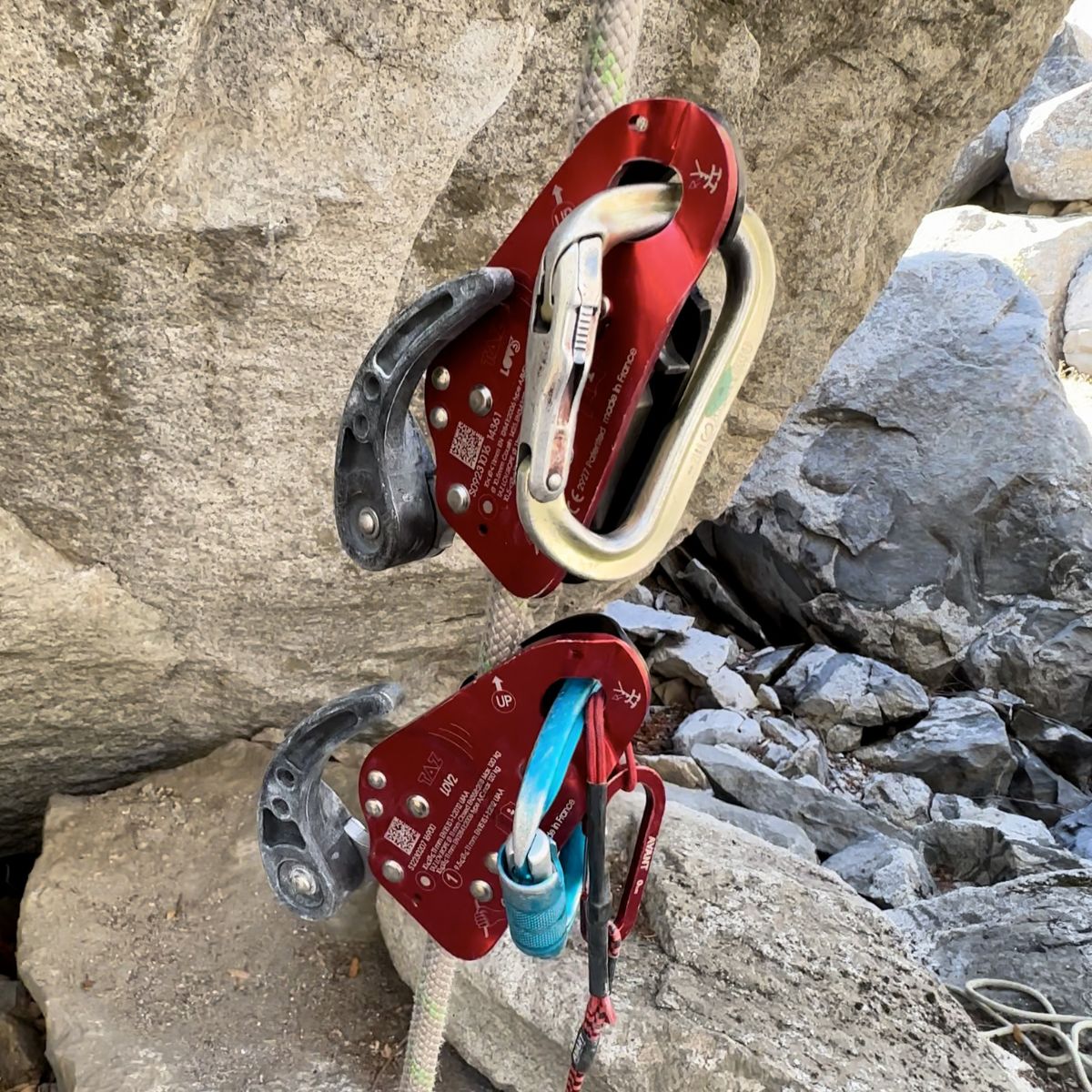
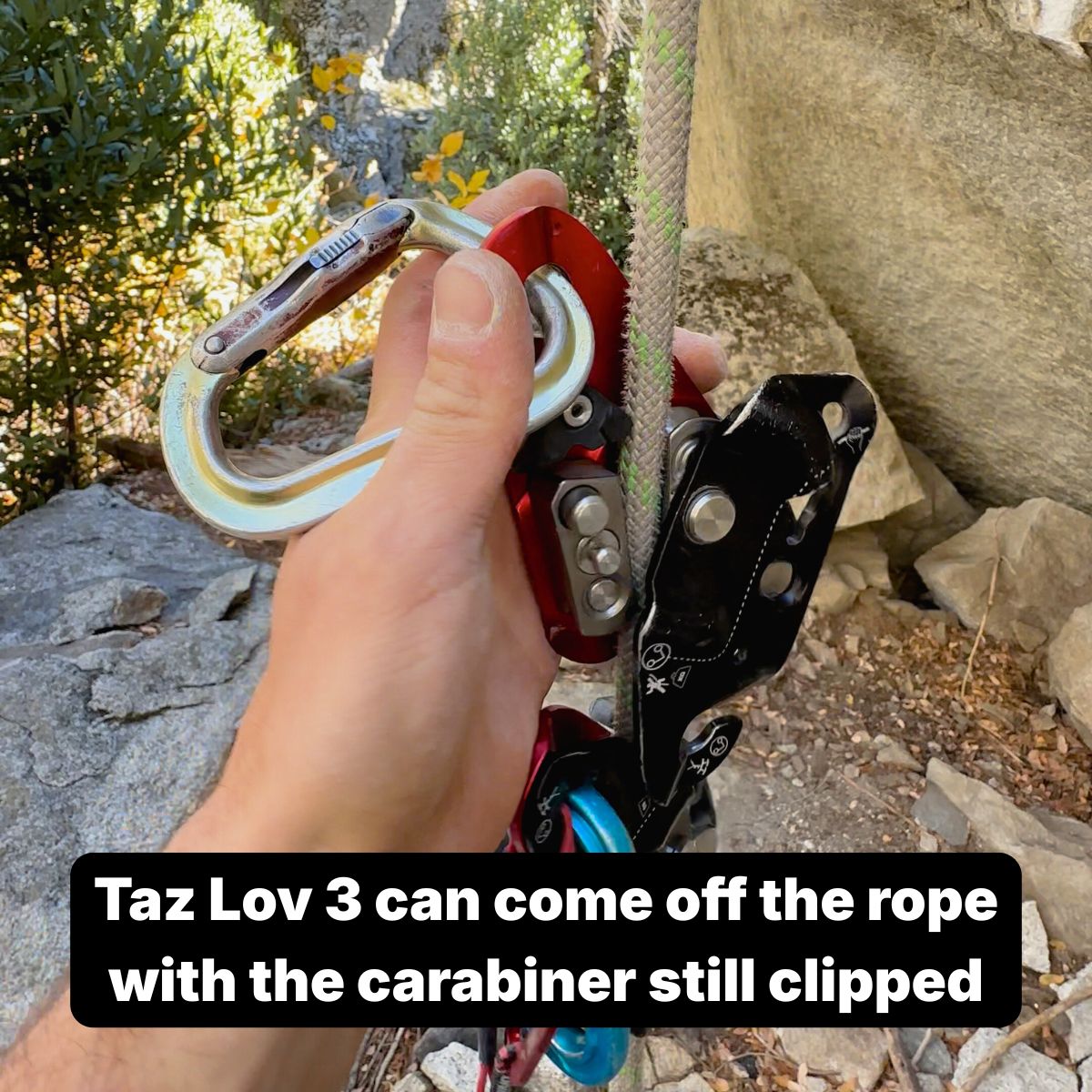
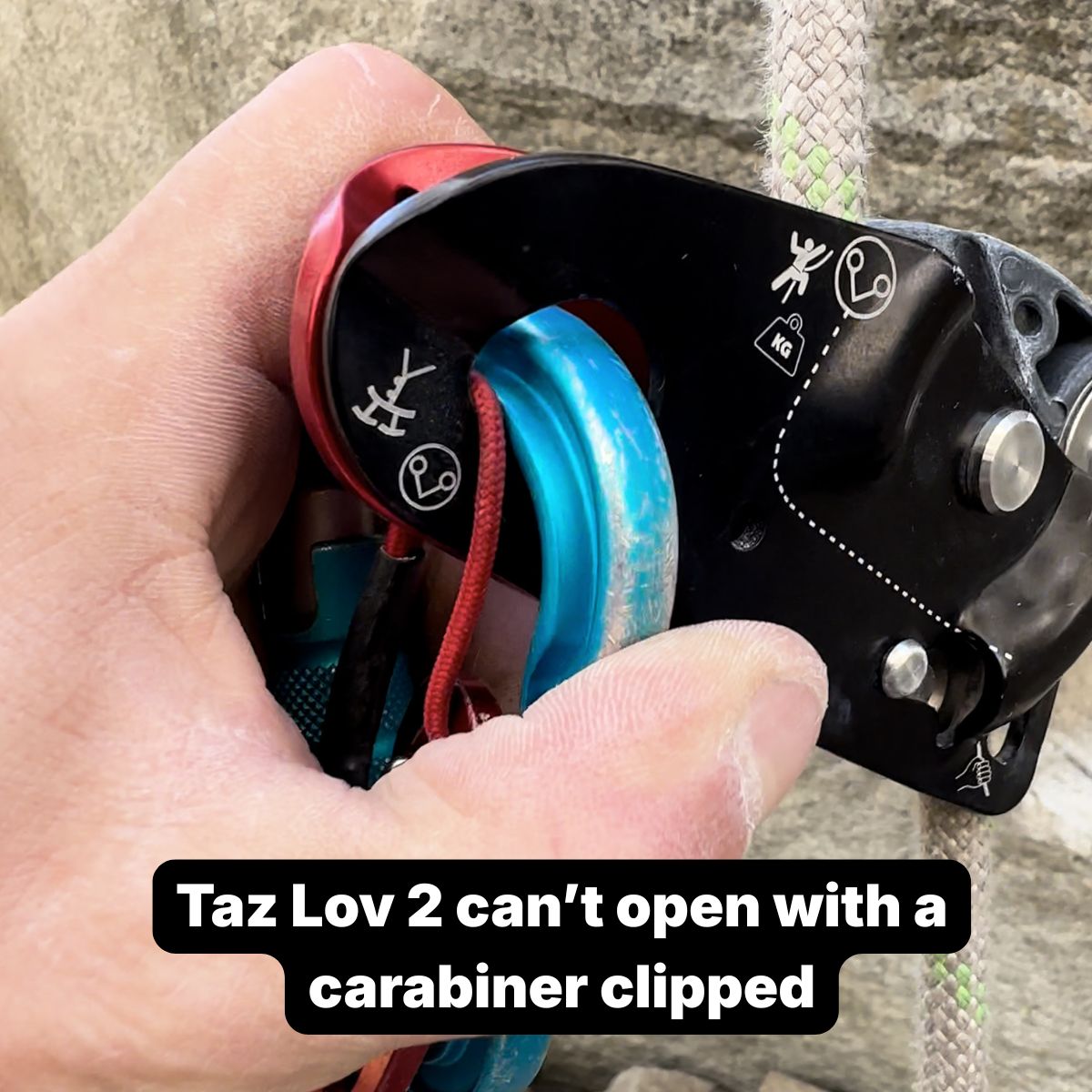
The Taz Lov2 stays permanently closed when clipped, more like a GriGri.
So… bigger number = better? Not always.
For top-rope soloing — especially when rehearsing boulder problems on a rope — I still prefer the Taz Lov2.
>> Watch a short video comparing the two devices side by side
My Setup for Rehearsing Boulders on a Rope
Paired with a Neck Lanyard, the Taz Lov2 feeds smoothly and allows for quick lowers between attempts. For my backup, I attach a Spoc with a Flex-Link Anti-Crossload protector, extended with a sling.
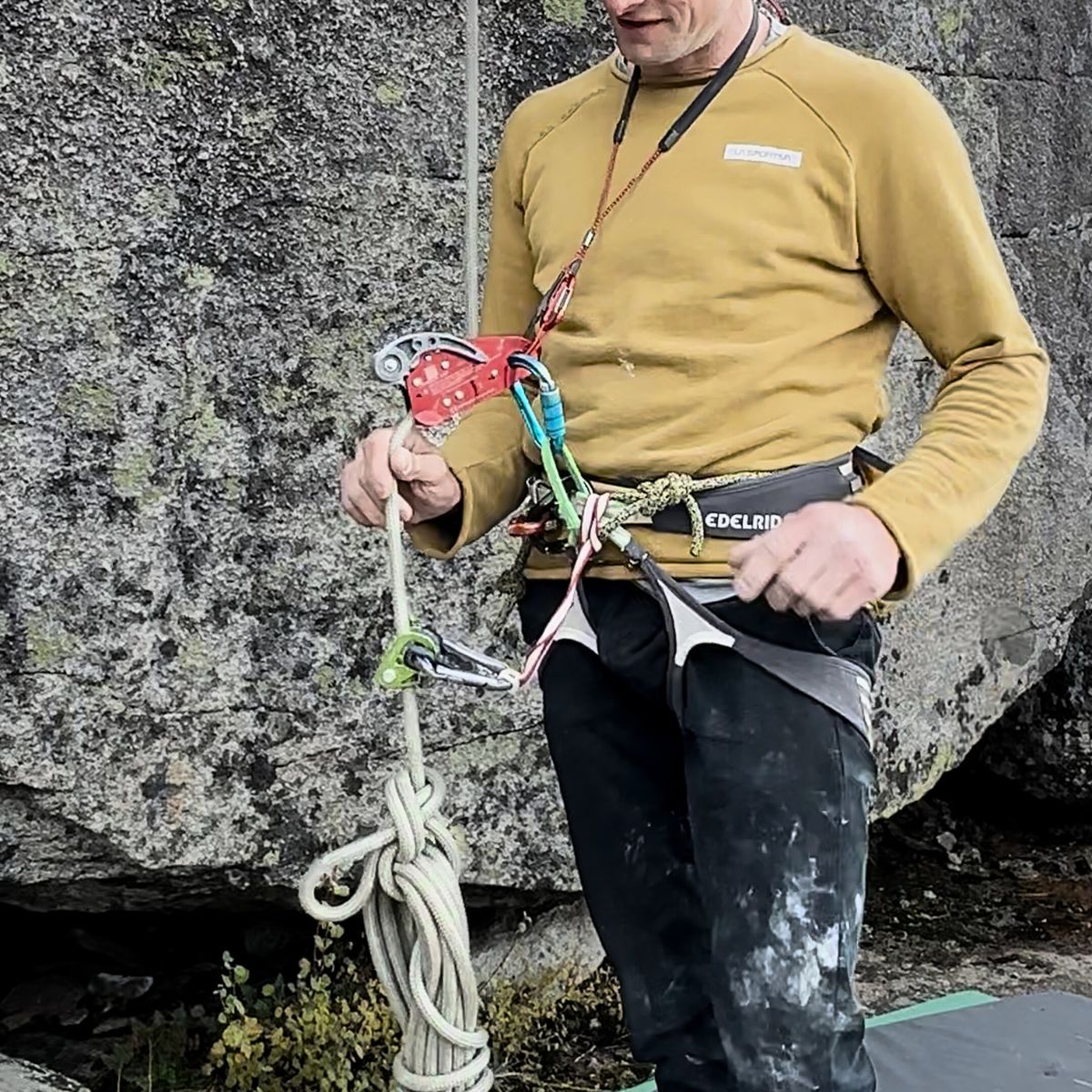
When I’m working only a short section, I’ll sometimes tie backup knots below the device instead of using a trailing progress-capture pulley. The result is a super streamlined setup that’s fast, simple, and ideal for dialing a few hard moves on a rope.
A lot of boulderers use a GriGri for this, but constantly pulling rope through the device can break your flow. The Taz Lov works similarly — except the straight rope path allows it to autofeed as you climb.
Always use a backup device or tie knots below you.
>> Watch: Taz Lov2 Setup with Backup Knots
>> Watch: Taz Lov2 Setup with Spoc Backup
Rope Considerations for the Taz Lov
Regardless of whether you go with a Taz Lov2 or Taz Lov3, rope choice matters. I recommend climbing on a static line that’s 10mm or thicker. I personally use an Edelrid Performance Static 10mm for dedicated top-rope soloing with the Taz Lov2.


