
Over the years of top rope soloing, I’ve tried a bunch of different device combos. Some worked okay, some were downright annoying mid-climb.
Here’s where I’ve landed:
Micro Traxion up top as my primary
Edelrid Spoc as the backup
A Flex-Link on the lower device to keep everything aligned and feeding
And a Neck Lanyard to hold the top device upright
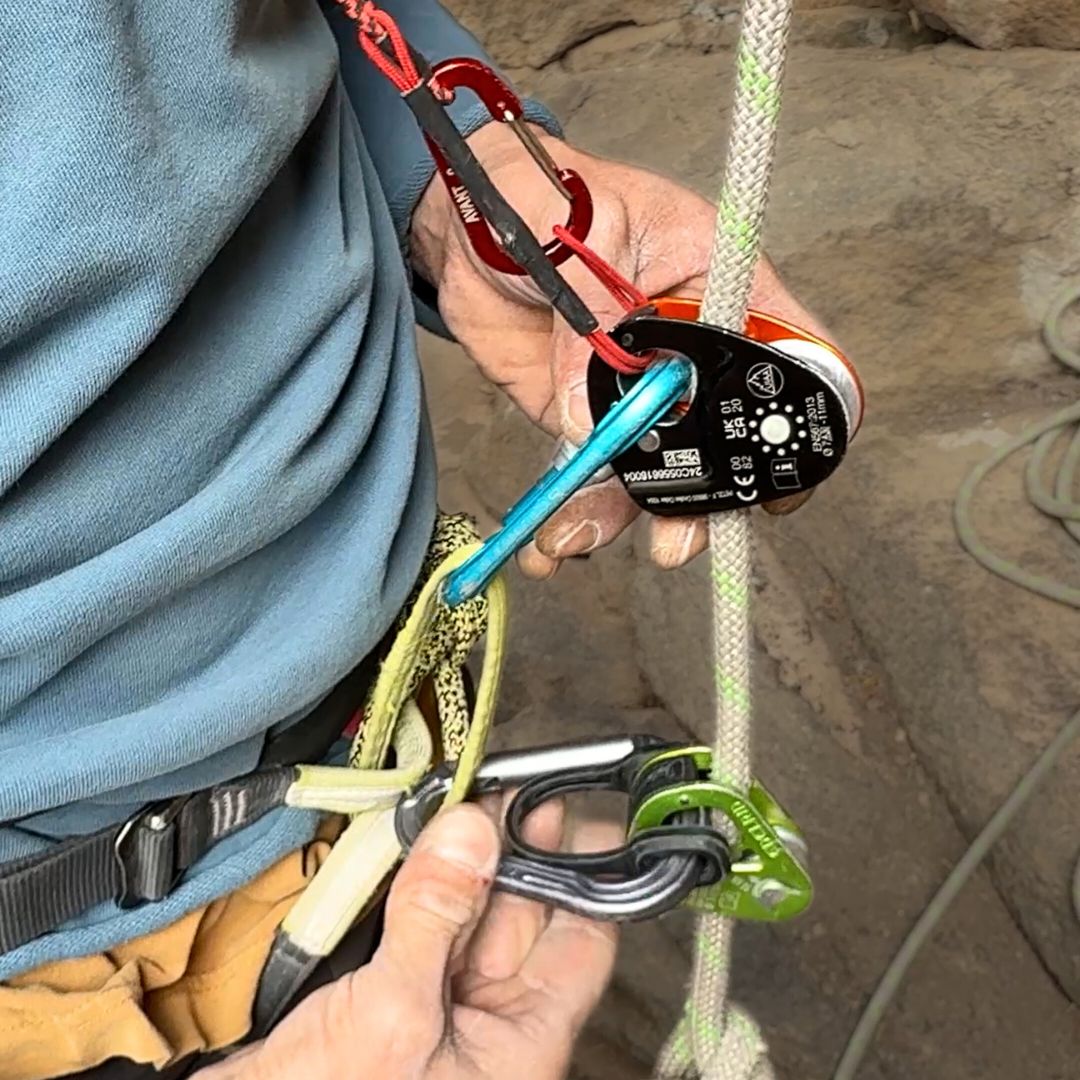
I like the Spoc a lot as a backup—it’s compact, feeds well, and with one quick cord cut you can disable the hold-open feature to make it more TRS-friendly.
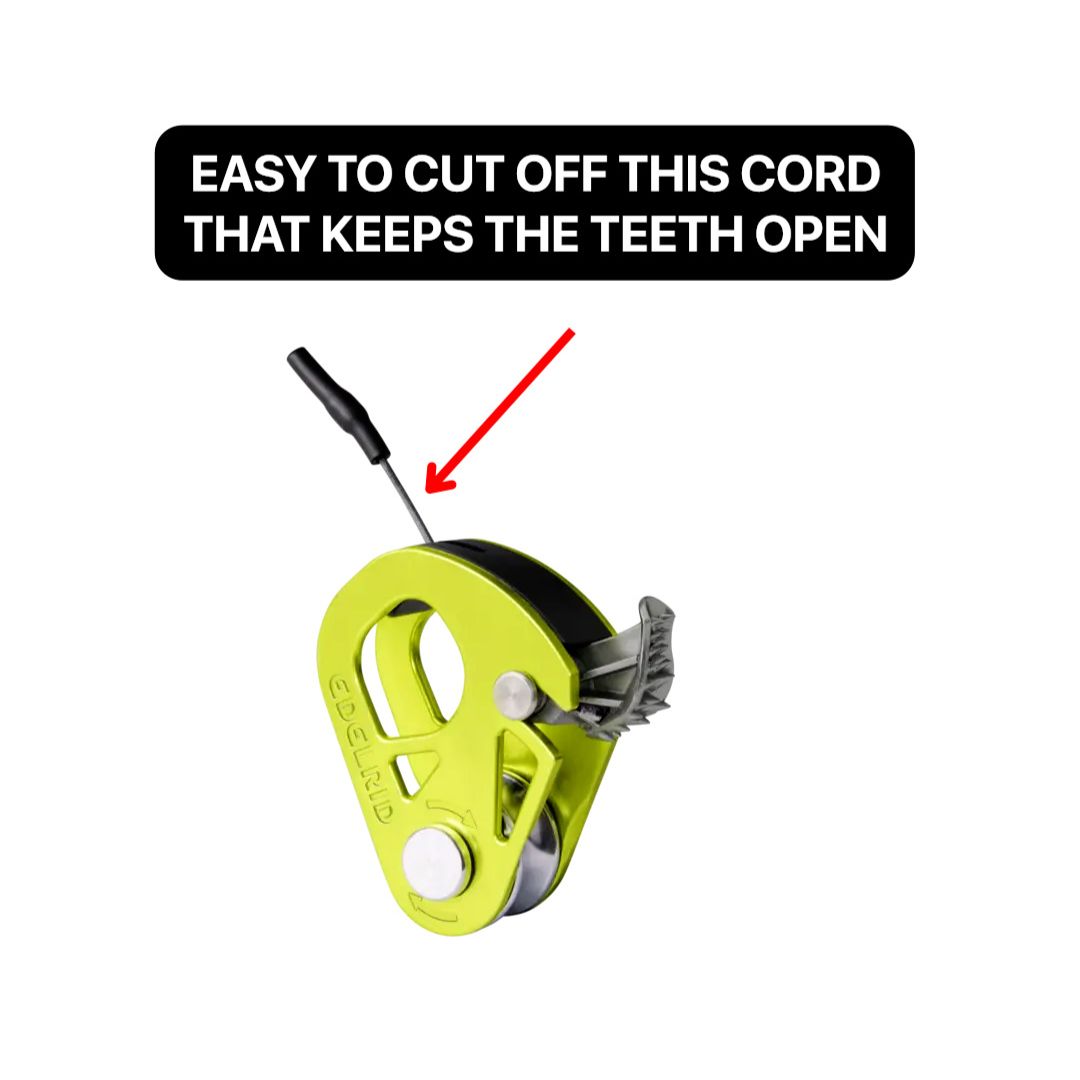
To me, a backup that can’t stay open is a much better backup!
It is possible to delete that same hold open feature on a Petzl Micro Traxion, but you need to use a Dremel to grind off steel, and that is not recommended.
>> Click to watch how we compared the drag of 5 different progress capturing devices!
Why don’t I just use two Spocs since this hold-open feature is easier to delete, adding extra security?
The Spoc cam sticks out further from its sideplates than the Microtraxion cam does. When used as a top device, the protruding cam can snag the bottom device and stop the system from auto feeding.
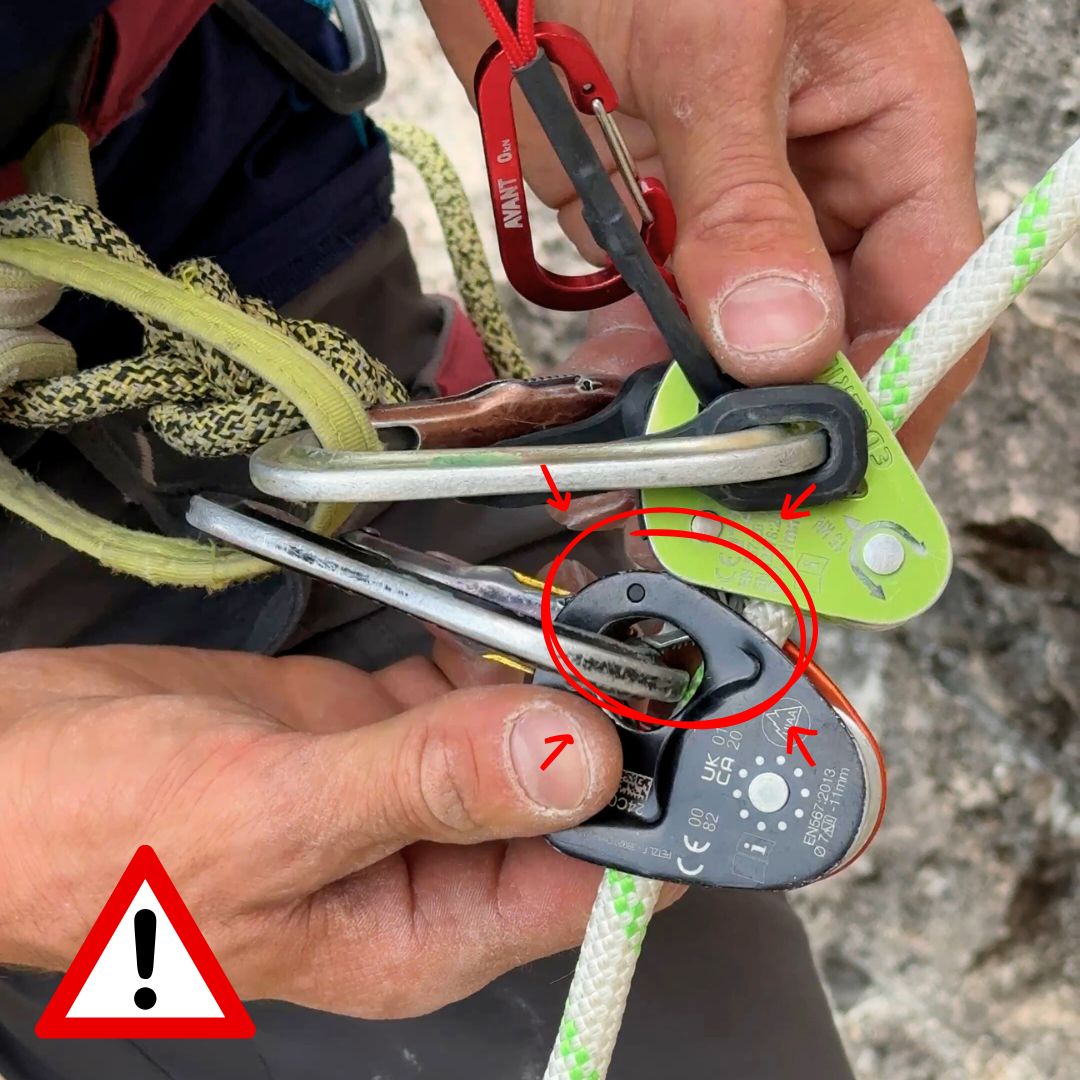
So, I have come to love the Microtraxion as my top device and the Spoc as my lower backup device.
The Flex-Link is used for extra crossload peace of mind in lead soloing. For the low force falls of top rope soloing, this crossload risk is minor. But, I found using the Flex-Link on my bottom carabiner keeps the device from going sideways and binding on the rope. It greatly improves auto feeding!
If you’re dialing in your own TRS kit, this setup has been the most reliable I’ve found. Add the Flex-Link and Neck Lanyard, and the whole system just flows.


